


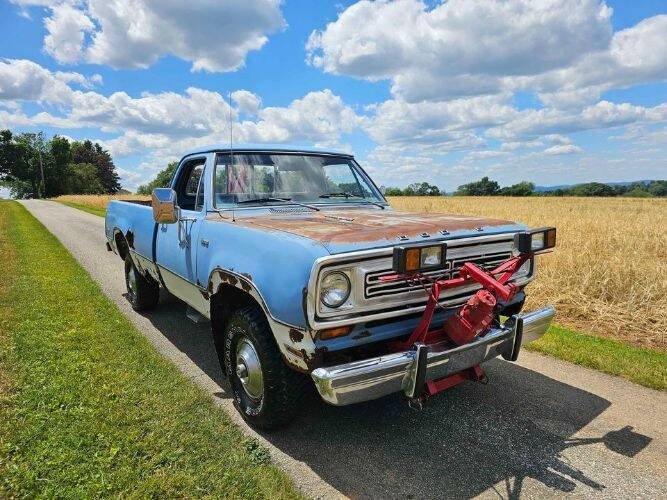

1973 Dodge D100 Pickup
The 1973 Dodge D100 Pickup marked a significant evolution for Dodge's light-duty truck line, ushering in the brand's "Action-Line" generation with a complete redesign. This model year represented a departure from the previous generation, focusing on increased comfort, improved styling, and enhanced functionality. The D100 was Dodge's entry-level half-ton pickup, offering a blend of workhorse capability and everyday usability for a wide range of customers, from ranchers and contractors to families seeking a versatile vehicle.
Key Features and Design:
- Body Style: The 1973 D100 featured a completely new body shell, characterized by straighter lines, a more integrated cab and bed design, and a significantly larger glass area for improved visibility. This created a more modern and less boxy appearance compared to its predecessors.
- Front End: A prominent new grille, typically featuring horizontal bars and a prominent Dodge emblem, defined the front fascia. Headlights were now quad units, enhancing both aesthetics and nighttime illumination. The hood was flatter, and the fenders had a more sculpted, less angular look.
- Cab Options: Standard cab configurations included the regular cab, offering a spacious interior for two. Over the years, variations like the club cab (extended cab) became available in later iterations of this generation, though the standard cab was the most common for the D100 in its initial year.
- Bed Options: Buyers could typically choose between a standard bed (around 6.5 feet) and a long bed (around 8 feet), catering to different hauling needs.
- Interior: The interior received a substantial upgrade, prioritizing driver comfort. The dashboard was redesigned with a more functional layout, and improved seating materials were introduced. Features like bench seats were standard, with optional bucket seats becoming more prevalent. Sound deadening was also improved, contributing to a quieter ride.
- Chassis and Suspension: The D100 utilized a body-on-frame construction, a standard for pickup trucks of the era. The suspension system was designed to balance hauling capacity with a more comfortable ride, often featuring leaf springs in the rear and independent front suspension (IFS) on some models, though the IFS was more common on the heavier-duty trucks.
Powertrain Options:
The 1973 Dodge D100 was offered with a variety of robust engine options, primarily V8s, to suit different performance and towing requirements:
- 225 Slant-Six: Dodge's reliable and economical 225 cubic inch (3.7L) "Slant-Six" engine was often available as the base engine. While not a powerhouse, it provided dependable performance and good fuel efficiency for its time.
- 318 V8: The 318 cubic inch (5.2L) "Poly" V8 was a popular choice, offering a good balance of power and drivability.
- 360 V8: For those seeking more performance, the 360 cubic inch (5.9L) V8 was available, providing increased torque and horsepower.
- 400 V8 (less common on D100): While the 400 cubic inch (6.6L) V8 was primarily offered on heavier-duty models, it could sometimes be found in a D100 if specified.
Transmission Options:
- Manual Transmissions: Typically a 3-speed manual was standard, with a 4-speed manual often available as an option for enhanced performance and fuel economy.
- Automatic Transmissions: Dodge's Torqueflite automatic transmission was the premium option, offering a more relaxed driving experience and smoother gear changes.
Trim Levels and Configurations:
The D100 was Dodge's base half-ton pickup, but Dodge offered various configurations and optional packages to customize the truck:
- D100 Custom: This designation often indicated a slightly more upmarket version with some added comfort and cosmetic features.
- Payload Packages: Buyers could opt for payload-enhancing packages that included heavier-duty springs and tires for increased hauling capacity.
- Towing Packages: Similarly, towing packages provided equipment like trailer hitches and transmission coolers for better towing performance.
Market Position and Legacy:
The 1973 Dodge D100 was a strong competitor in the burgeoning pickup truck market of the early 1970s. It appealed to a wide demographic due to its improved comfort, updated styling, and the reputation of Dodge trucks for durability. This generation of Dodge pickups would go on to be produced with various updates through the end of the decade, solidifying its place as a capable and desirable workhorse and personal vehicle. Today, the 1973 D100 is sought after by collectors and enthusiasts for its classic styling and its representation of a pivotal moment in Dodge truck design.