

1972 Plymouth Road Runner: The Muscle Car Evolves
The 1972 Plymouth Road Runner represented a significant turning point for the iconic muscle car. While still bearing its signature aggressive styling and a focus on performance, the Road Runner underwent a metamorphosis, adapting to changing market demands and tightening emissions regulations. It was a year of refinement and evolution, balancing its raw power with a slightly more refined edge, and offering a compelling package for those who desired both performance and a touch of flair.
Styling and Design
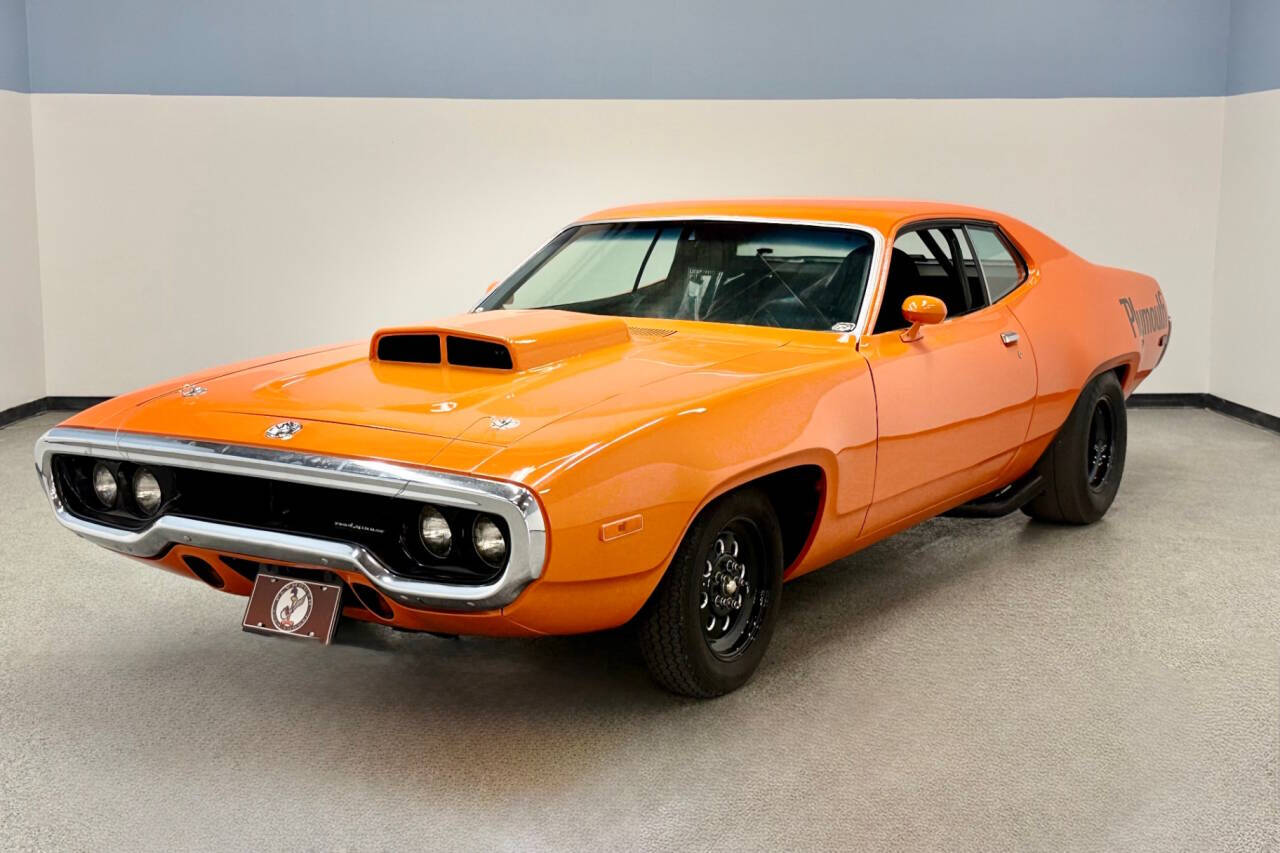
For 1972, the Road Runner retained its distinctive, no-nonsense visual appeal. The front end featured a new, more integrated grille design that was divided into two sections, giving it a slightly wider and more menacing look. The iconic "beak" nose was still present, though it was softened somewhat compared to previous years. Quad headlights remained a prominent feature, contributing to its aggressive stance.
The side profile was characterized by clean lines and a muscular silhouette. The iconic side stripes, often emblazoned with "Road Runner" lettering, continued to be a hallmark of the model, providing a vibrant contrast to the body color. A new, recessed taillight design was introduced, offering a more modern and less protruding appearance. The overall design was still very much in the "muscle car" idiom, but with subtle updates that hinted at a more mature, albeit still wild, personality.
Powertrain Options: The Search for Power
The 1972 model year saw a shift in the Road Runner's engine offerings, largely driven by new federal emissions standards. The legendary 440 "Six Pack" engine, with its triple two-barrel carburetors, was no longer available due to these regulations. This was a significant blow to the ultimate performance enthusiast.
However, the Road Runner still offered potent V8 power:
- 340 cu in (5.6 L) V8: This smaller, yet spirited, V8 was now the standard engine for the Road Runner. While not as powerful as its larger brethren, it still provided respectable performance and was a more fuel-efficient and emissions-compliant option. It was often paired with a 3-speed manual transmission.
- 400 cu in (6.6 L) V8: This was the optional powerhouse for the '72 Road Runner. Available in a standard 2-barrel carburetor version and a more potent 4-barrel version, it offered a significant step up in performance from the 340. The 4-barrel version, in particular, provided a satisfying rumble and ample acceleration, making it the preferred choice for many seeking a true muscle car experience.
- 440 cu in (7.2 L) V8: The big-block 440 remained an option, though it was now only available with a single 4-barrel carburetor. While it lost the "Six Pack" setup, it still delivered formidable torque and horsepower, solidifying its position as the top-tier engine for the Road Runner.
Transmissions typically included a 3-speed manual (standard on the 340), a 4-speed manual, and a TorqueFlite automatic transmission. Performance differentials, such as a Sure-Grip limited-slip differential, were available options to enhance traction and acceleration.
Interior and Features
The interior of the 1972 Road Runner was functional and driver-focused. It reflected the car's performance ethos rather than luxurious appointments. Standard features were kept to a minimum to keep costs down, aligning with the "budget muscle car" philosophy. Bucket seats were a common sight, providing support during spirited driving. A simple dashboard with clear instrumentation was designed for quick glances at speed, RPM, and fuel levels.
Optional features allowed for some customization and comfort:
- Air Conditioning: Becoming increasingly popular, A/C was an option for those who wanted to drive their Road Runner in warmer climates without sacrificing its performance.
- Rallye Instrument Cluster: This optional upgrade provided a more comprehensive set of gauges, including a tachometer, oil pressure, and coolant temperature, appealing to the performance-minded driver.
- AM/FM Radio: For entertainment on the go, an upgraded stereo system was available.
- Power Steering and Power Brakes: These were often opted for, making the car easier to handle, especially in everyday driving situations.
The Road Runner's Place in History
The 1972 Plymouth Road Runner stands as a testament to the enduring appeal of the muscle car era, even as external forces began to reshape the automotive landscape. While the loss of the 440 Six Pack was a notable downgrade in raw power for some, the remaining V8 options still offered a thrilling driving experience. The '72 model year represented a period of adjustment for Plymouth, as they navigated the complexities of emissions control while striving to maintain the Road Runner's identity as a performance-oriented and stylish automobile. It was a car that continued to embody a spirit of rebellion and fun, proving that even with evolving regulations, the heart of the muscle car beat on.