

Skyway Classics

10420 Portal Crossing, Bradenton, FL 34211
4.7
4.7 out of 5 stars

Used 1969 Chevrolet Camaro

For Sale:$68,997

$1,000(1.5%)price increased

Estimated payment:$1,565/mo.
$0 trade-in, 10% down payment, 48 months, Great credit score

SequenceDatePrice ChangeCurrent Price
1.2/23/2025 (a year ago)$79,997
2.4/9/2025 (a year ago)-$5,000 (-6.3%)$74,997
3.5/21/2025 (a year ago)-$700 (-0.9%)$74,297
4.8/5/2025 (9 months ago)-$1,300 (-1.7%)$72,997
5.9/4/2025 (8 months ago)-$700 (-1.0%)$72,297
6.10/30/2025 (6 months ago)-$4,300 (-5.9%)$67,997
7.3/12/2026 (a month ago)+$1,000 (+1.5%)$68,997
  • Hatchback
  • Condition
    Used
  • Transmission
    Automatic
  • Exterior Color
    Blue
  • Interior Color
    Black
  • VIN
    -

Engine

GM 383 Stroker V8

Message from the seller

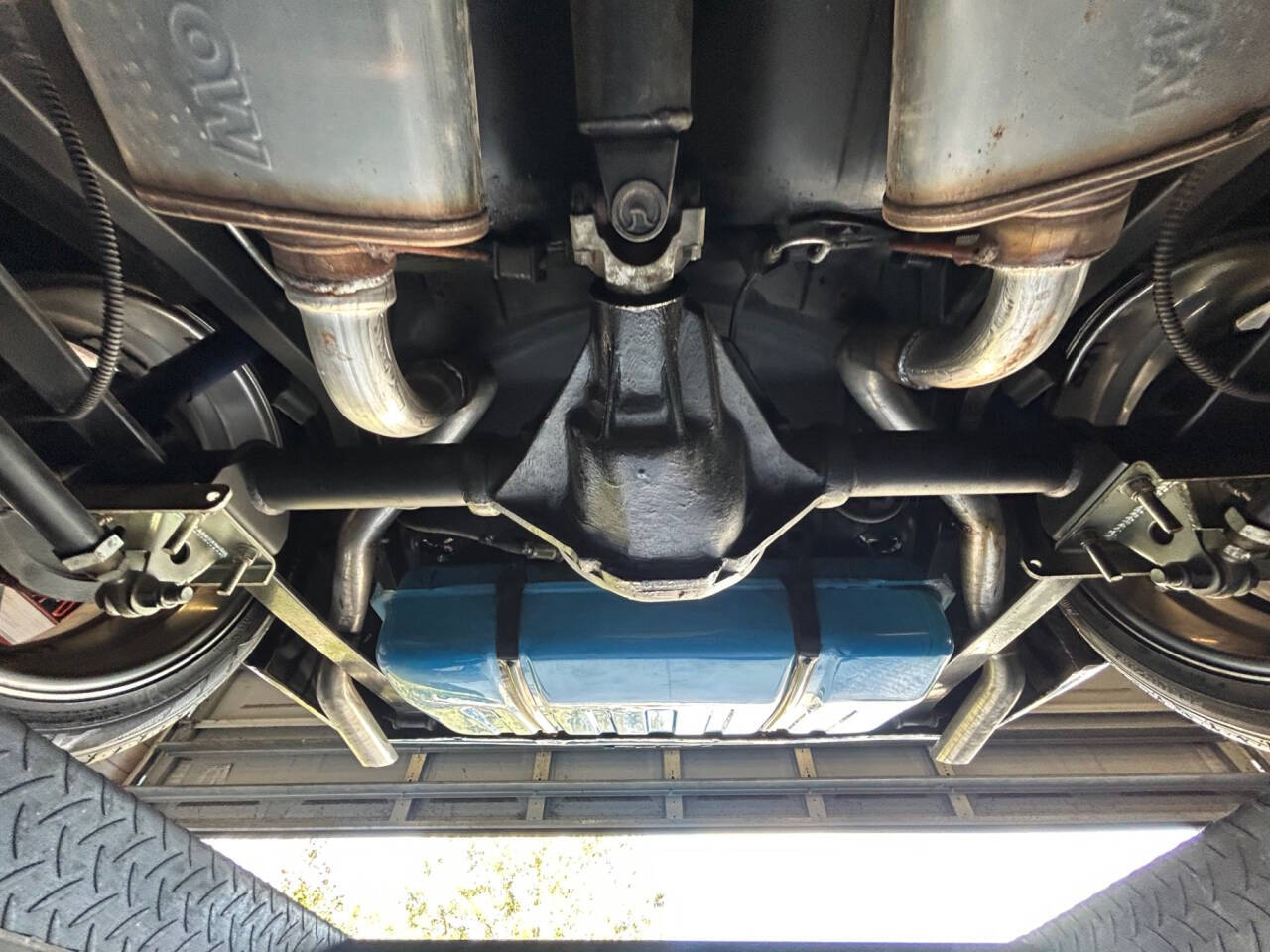
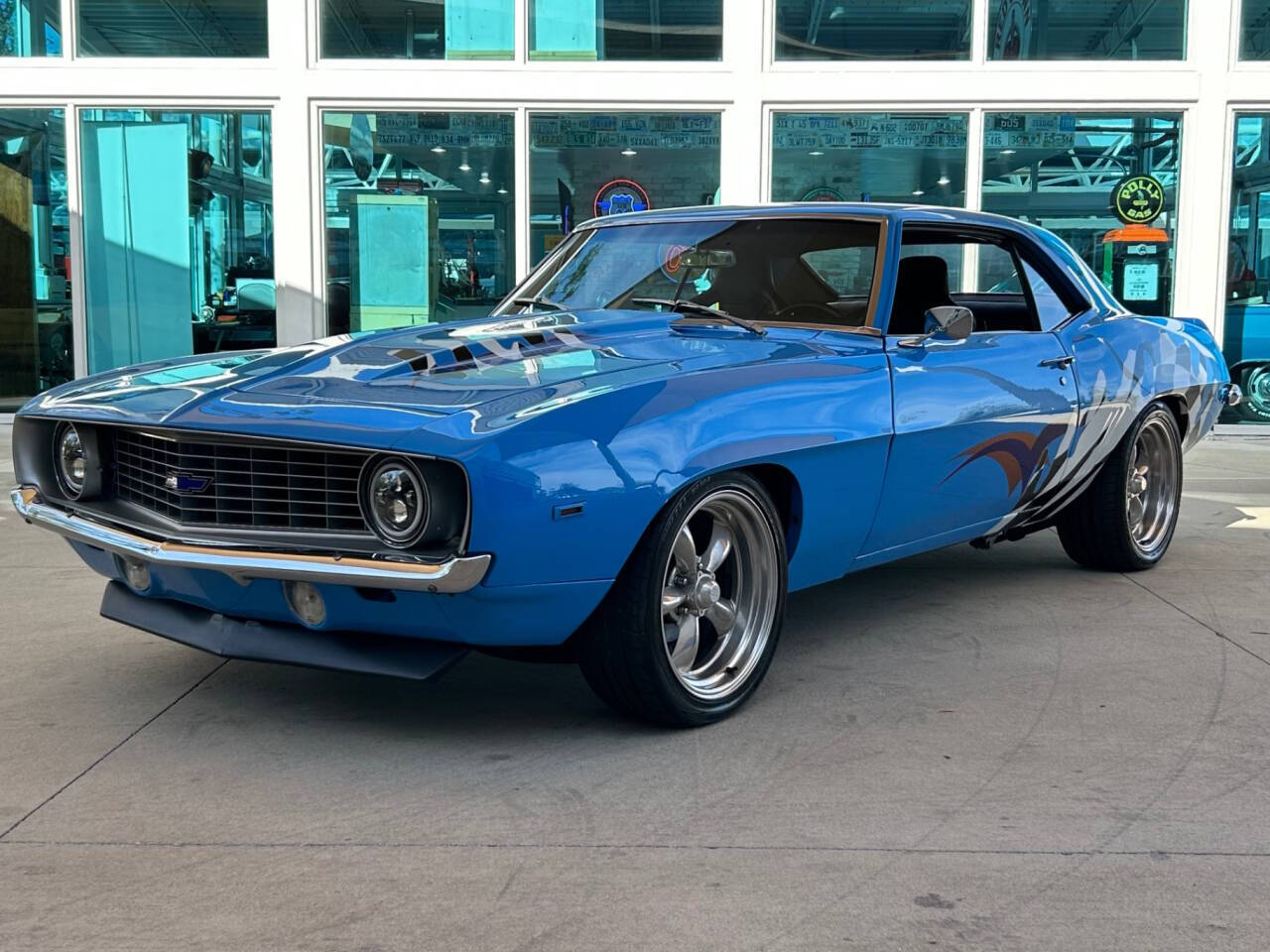
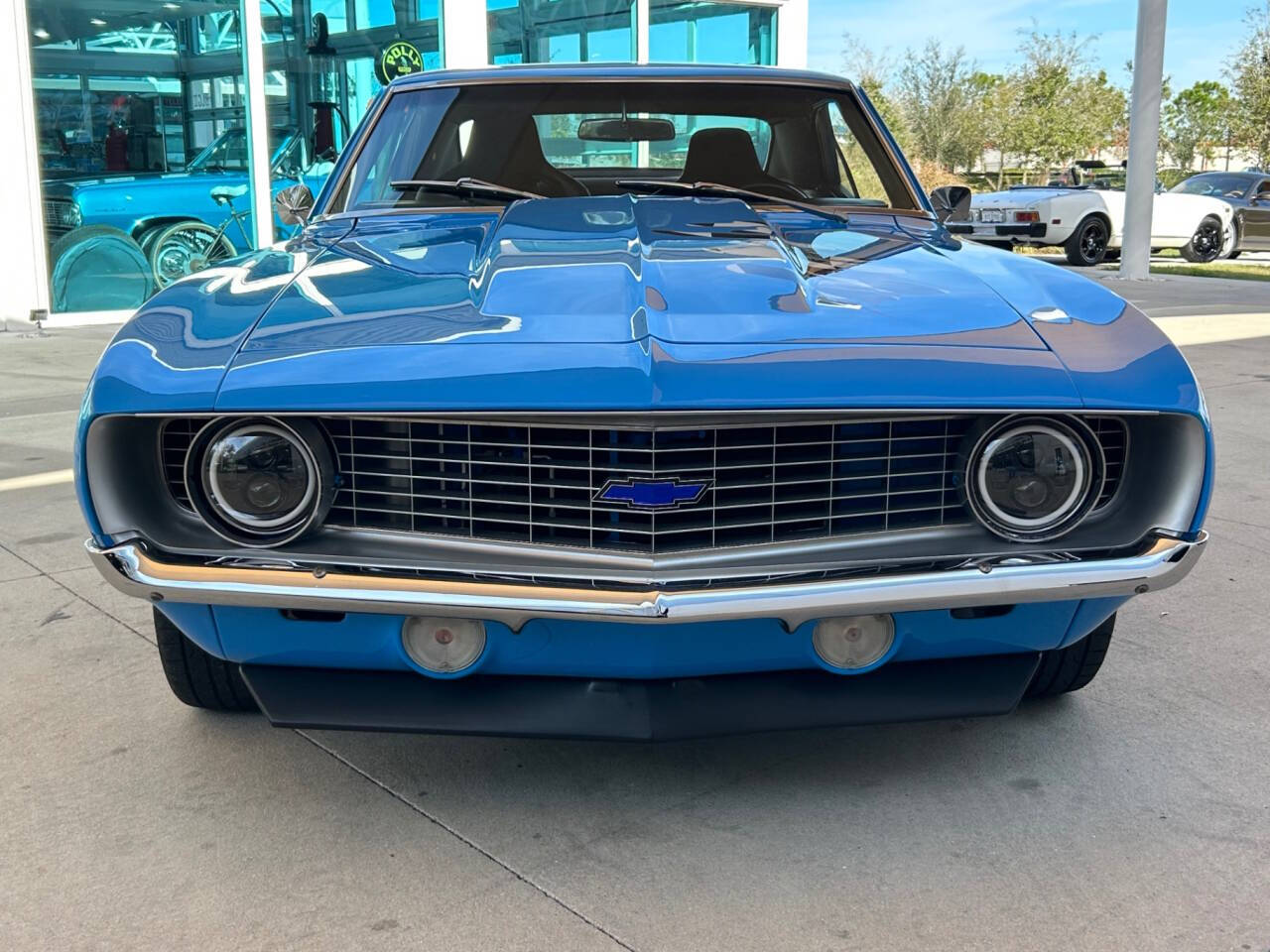
1969 Chevrolet Camaro Pro Street Custom — 383 Stroker, 12-Bolt Rear, Air Conditioning Why This Car Is Special The 1969 Chevrolet Camaro is widely considered the high-water mark of the first-generation F-body platform. Chevrolet sold 243,085 Camaros that model year, making it the best-selling year of the first generation, and the styling that designers Bill Mitchell and Henry Haga signed off on has never really gone out of fashion. The longer nose, wider stance, and more aggressive roofline the 1969 received over the 1967–68 cars gave it a presence the earlier cars simply didn't have. It was also the final year of that original body style — GM stretched the tooling one extra year before the second-generation car arrived — which means 1969 was both the peak and the finale of a design era. This particular 1969 Chevrolet Camaro is not a preservation car or a numbers-matching restoration. It's a purpose-built pro street custom that was built to be driven hard and look the part doing it. The builder replaced the original drivetrain with a GM 383 cubic inch stroker V8, upgraded the rear axle to a Moser 12-bolt, added power disc brakes, power steering, and air conditioning, and finished the body in a vivid custom blue with checkered graphics. The result is a 1969 Camaro that combines the most desirable body style in the first-generation lineup with a drivetrain that significantly outperforms anything Chevrolet offered at the dealership in 1969. The VIN on this car decodes to a Norwood, Ohio-assembled 1969 Chevrolet Camaro sport coupe, which is consistent with the body's straight, well-fitting panels and the solid underlying structure this build is based on. Features List - GM 383 cubic inch stroker V8 - Holley Demon carburetor - Aluminum intake manifold - Chrome valve covers - Open element performance air cleaner - Aluminum radiator - Painted and detailed engine compartment - Automatic transmission - Moser 12-bolt rear axle - Power front disc brakes - Power steering - Air conditioning - Dual exhaust system - Cowl induction hood - Front and rear spoilers - Custom bright blue paint with checkered graphics - Aftermarket 5-spoke chrome wheels - Black sidewall tires - High-back black racing seats with headrests - Matching factory rear seat and door panels - Black vinyl interior - Black carpet - Console with wood grain trim and automatic shifter - Factory dash with custom white-face performance gauges - Black Grant GT steering wheel - Radio Mechanical The engine in this 1969 Chevrolet Camaro is a GM 383 stroker, built by combining a small block Chevy block with a longer-stroke crankshaft to displace 383 cubic inches — more than the largest small block Chevrolet ever put in a production Camaro. The 383 stroker is one of the most proven combinations in the custom car world, and for good reason. When properly built, it produces torque across a broad RPM range, which suits street driving far better than a high-revving race engine. This one is topped with a Holley Demon carburetor and an aluminum intake manifold, both of which reduce weight compared to cast iron while improving airflow and throttle response. Chrome valve covers and an open element air cleaner keep the engine bay consistent with the car's pro street presentation, and the entire compartment has been painted and detailed to a show-quality standard. Behind the engine sits an automatic transmission, which pairs well with the torque characteristics of the 383 and makes the car genuinely easy to drive in traffic. The Moser 12-bolt rear axle is a significant upgrade — Moser Engineering is one of the most respected names in aftermarket rear axle assembly, and their 12-bolt units are built to handle substantially more power than a stock Camaro rear would ever see. The factory 12-bolt was already the stronger of the two axle configurations Chevrolet used in first-generation Camaros, so using a Moser-built version of that same housing architecture is the right call for

1969 Chevrolet Camaro

The 1969 Chevrolet Camaro stands as a pivotal model in the pony car wars, a year that saw significant styling refinements and the introduction of iconic performance packages. This third year of the Camaro's first generation built upon the success of its predecessors, solidifying its place as a formidable competitor to the Ford Mustang and a symbol of American automotive performance and style.

Key Features and Design:

  • Refined Styling: While retaining the familiar coke-bottle silhouette, the 1969 Camaro received a comprehensive facelift. The front end featured a more aggressive, redesigned grille with a deeper V-shape and integrated parking lights. The front fenders and doors were also subtly restyled, incorporating sharper character lines. The rear of the car sported new, wider taillights that were now set further into the bodywork, a subtle but impactful change that enhanced the car's width and muscular stance.
  • Body Styles: The 1969 Camaro was available in two body styles: a two-door coupe (often referred to as the "sport coupe") and a two-door convertible. Both offered a sporty and compact profile that appealed to a wide demographic.
  • Interior: The interior continued the driver-focused theme, with a dashboard featuring a comprehensive array of gauges. Bucket seats were standard, and the option for a center console with a floor-mounted shifter further enhanced the sporty feel. Upholstery options ranged from vinyl to houndstooth cloth, offering varying levels of luxury and sportiness.

Powertrain and Performance Options:

The 1969 Camaro offered an extensive range of engine and transmission choices, catering to buyers seeking anything from economical cruising to outright track performance.

  • Inline-Six Engines:

    • 230 cu in (3.8 L) Straight-Six: The base engine, delivering modest but reliable performance.
    • 250 cu in (4.1 L) Straight-Six: An upgraded inline-six option offering slightly more power.
  • V8 Engines:

    • 302 cu in (4.9 L) "Z/28" Small-Block V8: This high-revving engine was a homologation special for Trans-Am racing, featuring a forged crankshaft, solid lifters, and a Holley four-barrel carburetor. It was renowned for its agility and power output, specifically tuned for road racing.
    • 327 cu in (5.4 L) Small-Block V8: Available in various states of tune, including a 210 hp version.
    • 350 cu in (5.7 L) Small-Block V8: A popular and potent option, offering 255 hp (SS 350) or 295 hp (SS 350 with a higher-performance carburetor).
    • 396 cu in (6.5 L) "L34" Big-Block V8: Producing 325 hp, this was the entry-level big-block option for the Super Sport package.
    • 396 cu in (6.5 L) "L78" Big-Block V8: The most potent factory big-block for 1969, this engine churned out an impressive 375 hp, offering serious straight-line acceleration.
  • Transmissions: Manual transmissions included a three-speed and a four-speed Muncie. A two-speed Powerglide automatic and a three-speed Turbo-Hydramatic automatic were also available.

Iconic Trim Levels and Packages:

  • RS (Rally Sport): This appearance package added distinctive styling cues, most notably the hidden headlights with vacuum-operated doors, revised taillights with backup lights below the bumper, and bright exterior trim.
  • SS (Super Sport): The performance-oriented package, which included the SS badging, simulated hood scoops, and typically the larger V8 engines (350 or 396).
  • Z/28: Specifically designed for Trans-Am racing homologation, the Z/28 package included the potent 302 cu in V8, a close-ratio Muncie four-speed transmission, heavy-duty suspension, power disc brakes, and quick-ratio steering. It also received specific styling cues like rally stripes and a front spoiler.
  • Pace Car Replica: A limited production run of Z/28 Camaros were built to pace the 1969 Indianapolis 500, featuring unique color schemes (like Dover White with Hugger Orange stripes) and special badging, making them highly sought-after by collectors.

Legacy:

The 1969 Chevrolet Camaro is widely considered by many enthusiasts to be the definitive first-generation Camaro. Its refined styling, extensive customization options, and potent performance packages solidified its reputation as a true American icon. The Z/28, in particular, cemented the Camaro's image as a serious performance machine capable of holding its own on the race track. Today, pristine examples of 1969 Camaros, especially those equipped with the more powerful engines or the rare Z/28 package, are highly prized by collectors and enthusiasts, representing a golden era of American muscle cars.

1view
Listed on February 23, 2025 (a year ago)
Not the right one?143 similar vehicles available nationwide
View Similar Vehicles

This Used 1969 Chevrolet Camaro is available for drivers in Bradenton, Sarasota, Palmetto, Riverview, Venice, Ruskin, Sun City Center, Parrish ...

Cruz™ Disclaimer: Vehicle details shown on this site are provided by sellers or third parties. Cruz™ does not independently verify this information and is not liable for its accuracy. All services and content are offered without any warranty, either expressed or implied. Learn more here.MPG & Max Range: Fuel economy estimates are provided by the EPA and are intended for comparison purposes only. Your actual mileage will vary depending on driving conditions, vehicle condition, and other factors.Price: Prices shown may not include taxes, fees, or other charges. Prices and availability are subject to change without notice. Contact the seller for the most current pricing information.Options & Features: Installed options may not be shown. Contact the seller for more information about available features and options.