

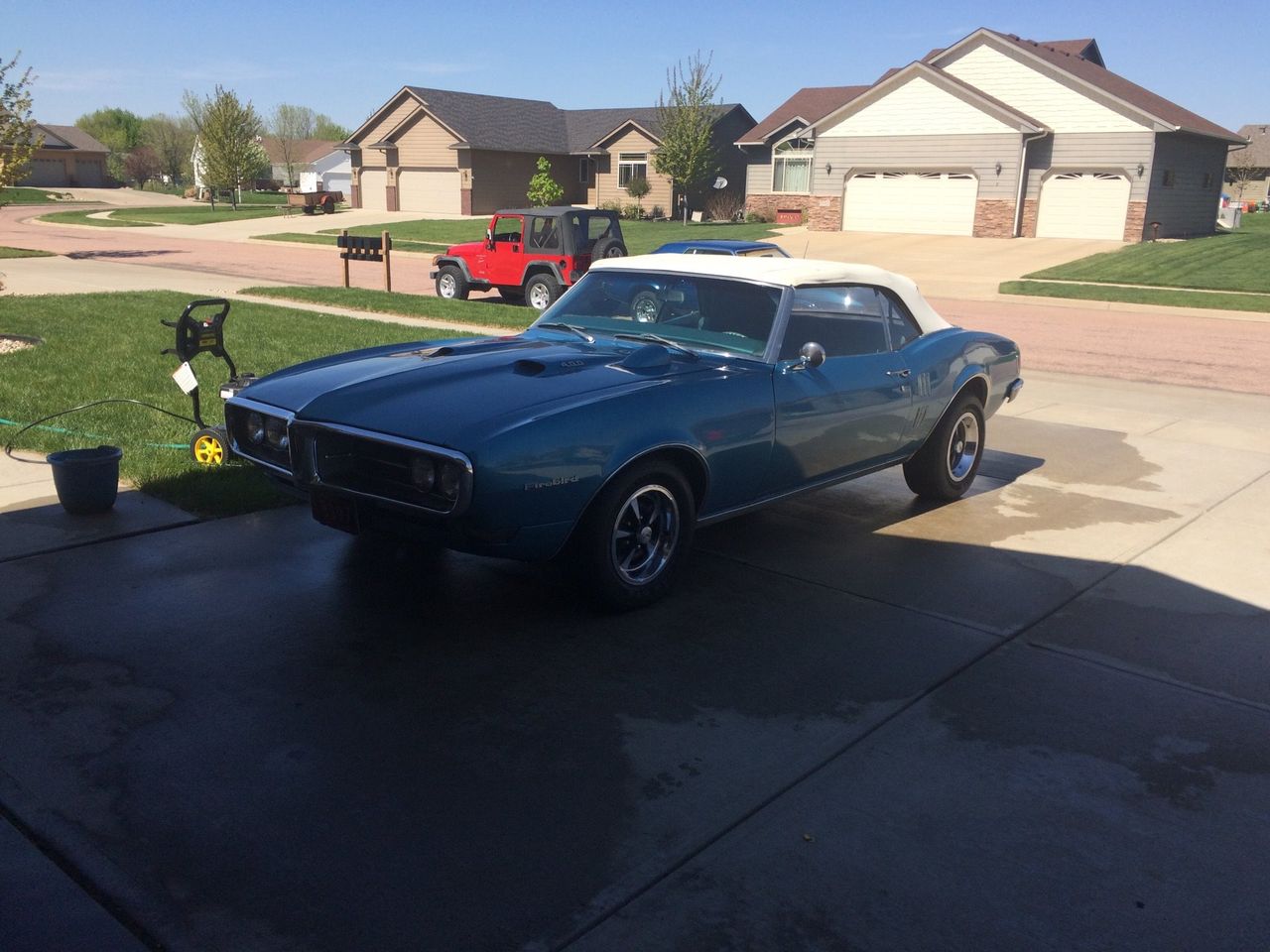
1968 Pontiac Firebird
The 1968 Pontiac Firebird, the second year of Pontiac's highly successful pony car, built upon the solid foundation of its 1967 debut, refining its styling, enhancing its performance options, and solidifying its position as a desirable alternative to the Chevrolet Camaro. While sharing its unibody platform and many mechanical components with the Camaro, the Firebird always carved out its own distinct identity, emphasizing Pontiac's signature styling cues and performance-oriented ethos.
Styling and Design:
For 1968, the Firebird received subtle yet impactful exterior updates. The most noticeable change was a refined front-end treatment. The signature Pontiac split grille remained, but it was now framed by a more pronounced bumper that wrapped further around the sides. The headlights were still mounted within the grille openings, contributing to its aggressive yet elegant appearance.
The side profile saw minor revisions. The earlier side marker lights were replaced with integrated units that blended more smoothly into the fender line, complying with new federal safety regulations. The overall silhouette retained its muscular yet compact proportions, with a long hood and short deck.
Inside, the Firebird offered a driver-focused cockpit. The dashboard featured a clean, functional layout with clear instrumentation. Standard interior appointments were comfortable, and a range of optional upgrades allowed for further personalization, from upgraded seating materials to more deluxe trim packages. The coupe and convertible body styles were available, catering to different buyer preferences.
Powertrain Options and Performance:
The heart of the 1968 Firebird's appeal lay in its diverse range of engine options, a key differentiator from its Camaro sibling. Pontiac's commitment to V8 power was evident:
-
Sprint Six (250 cu in / 4.1 L Inline-6): While not a V8, the "Sprint" option for the inline-six engine was a notable performance upgrade. It featured a higher compression ratio, a larger carburetor, and a more aggressive camshaft, producing a respectable 175 horsepower. This offered a balance of economy and spirited performance.
-
350 HO (350 cu in / 5.7 L V8): The entry-level V8 was the 350 cubic inch engine. The "HO" (High Output) version was a significant step up, featuring a four-barrel carburetor and producing 290 horsepower. This engine provided a substantial boost in performance and was a popular choice for many buyers.
-
400 (400 cu in / 6.6 L V8): The legendary "400" engine was the undisputed king of the Firebird lineup. Available in various configurations, the standard 400 produced 330 horsepower with a four-barrel carburetor.
-
400 Ram Air: For the ultimate in muscle car performance, the Ram Air option was available. This included a special camshaft, a Ram Air induction system that drew cool air from scoops under the front bumper, and a higher-performance exhaust system, pushing horsepower figures to an impressive 335 horsepower. This option was a true performance statement.
Transmission choices included a standard three-speed manual, an optional four-speed manual, and Pontiac's Turbo Hydra-Matic automatic transmission.
Trim Levels and Packages:
Beyond the standard Firebird, Pontiac offered distinct packages that further defined the car's character:
-
Firebird 350: This package specifically denoted the presence of the 350 HO V8 engine.
-
Firebird 400: As the name suggests, this package came standard with the 400 V8 engine. It often included suspension upgrades and styling enhancements like unique hood scoops and badging.
-
Firebird 400 Ram Air: This was the top-tier performance package, featuring the Ram Air 400 engine and all the associated performance enhancements.
Significance and Legacy:
The 1968 Pontiac Firebird continued to be a strong contender in the competitive pony car market. It appealed to buyers who appreciated Pontiac's distinctive styling, the availability of potent V8 engines, and a slightly more upscale feel than some of its rivals. The inclusion of the potent 400 cubic inch V8, especially in Ram Air form, cemented its status as a genuine muscle car. The 1968 model year represents a significant step in the evolution of the Firebird, refining its already appealing package and setting the stage for future performance iterations. It remains a sought-after classic for collectors and enthusiasts who appreciate its blend of style, power, and Pontiac heritage.