


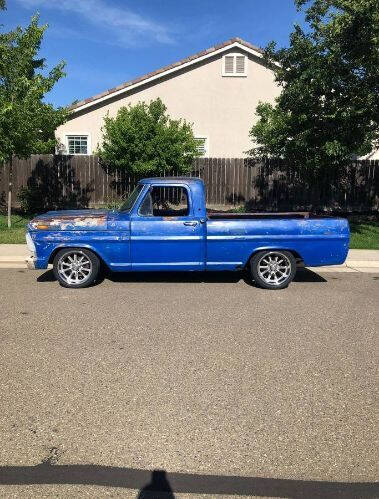

1968 Ford F-100: A Workhorse with Evolving Style
The 1968 Ford F-100 marked a significant year for Ford's popular "Bonus-Built" pickup truck line, continuing the evolution of its third generation (1967-1972). While retaining the foundational design introduced in 1967, the 1968 model year brought subtle yet impactful updates, solidifying its reputation as a robust and increasingly comfortable workhorse with a touch of emerging style.
Key Design and Styling Features:
The 1968 F-100 presented a bold and utilitarian aesthetic, characteristic of the era's trucks.
- Front End: The most notable update for 1968 was the revised grille. Ford transitioned from the horizontal bars of the 1967 model to a more prominent egg-crate style grille. This grille featured a more intricate pattern, often with a horizontal chrome bar spanning its width and the "FORD" lettering boldly displayed. The headlights remained round, flanking the grille. The hood also featured a subtle redesign with a more pronounced central crease.
- Body Lines: The clean, straight lines of the third-generation F-Series were carried over. The cab featured a simple yet effective design with large windows for excellent visibility. The front fenders smoothly integrated into the hood and doors.
- Bed Options: Like its predecessors, the 1968 F-100 was available in various bed configurations, primarily the short-bed (6.5 ft) and long-bed (8 ft) styles. These beds featured the classic, robust construction expected of a pickup truck.
- Trim Levels: While the F-100 was the base model, Ford offered various trim packages that could enhance the truck's appearance. These could include chrome accents on the bumpers, grille, and side trim. Higher trim levels might have featured dual headlights or other visual enhancements.
- Color Palette: Ford offered a range of popular colors for the 1968 F-100, catering to both practical and more expressive tastes.
Powertrain Options:
Ford offered a diverse selection of engines to meet the varying needs of its customers, from light-duty tasks to heavier hauling.
- Inline-Six Engines:
- 240 cubic inch (3.9L) I6: This was the standard engine, providing reliable power for everyday use.
- 300 cubic inch (4.9L) I6: A more powerful six-cylinder option, offering increased torque and capability.
- V8 Engines:
- 302 cubic inch (4.9L) Windsor V8: A popular and versatile V8, balancing power and fuel economy.
- 360 cubic inch (5.9L) FE V8: A larger, more torque-oriented V8 for those requiring more muscle.
- 390 cubic inch (6.4L) FE V8: The top-tier engine option for the F-100, delivering significant power and towing capability.
Transmission Options:
The 1968 F-100 provided a choice of transmissions to suit driver preference and application.
- 3-Speed Manual: The standard transmission, a robust and dependable unit.
- 4-Speed Manual: Offering more gear ratios for improved performance and fuel efficiency.
- 3-Speed Automatic (Cruise-O-Matic): An optional transmission for those seeking greater comfort and ease of operation, particularly in urban driving.
Interior and Features:
The interior of the 1968 F-100, while primarily functional, saw improvements in comfort and amenities compared to earlier generations.
- Seating: The cab typically featured a bench seat, offering seating for up to three occupants. Upholstery options ranged from durable vinyl to cloth in higher trim levels.
- Dashboard: The dashboard was straightforward and driver-focused, with essential gauges for speed, fuel, oil pressure, and temperature. Radio options and heater controls were also integrated.
- Visibility: Large windows and a relatively upright driving position provided excellent outward visibility.
- Optional Features: While base models were spartan, Ford offered a range of optional features to enhance comfort and convenience, including:
- Power steering
- Power brakes
- Air conditioning (a significant luxury for the time)
- AM radio
- Custom interior trim packages
Legacy and Significance:
The 1968 Ford F-100 cemented the F-Series' position as a dominant force in the American pickup truck market. It represented a harmonious blend of rugged utility and evolving comfort. Its strong build quality, diverse powertrain options, and increasingly refined styling made it a popular choice for farmers, contractors, and everyday users alike. Today, well-maintained examples of the 1968 F-100 are highly sought after by collectors and enthusiasts for their classic Americana appeal and their enduring capability. It stands as a testament to Ford's commitment to producing reliable and versatile trucks that have shaped the automotive landscape.