

1967 Shelby GT500
The 1967 Shelby GT500 stands as a legendary icon of American muscle car history, a potent and striking evolution of Carroll Shelby's collaboration with Ford. Built upon the foundation of the already formidable Mustang, the GT500 was conceived as the ultimate performance machine, a homologation special designed to dominate both the street and the racetrack. It was a car that exuded raw power, aggressive styling, and a no-nonsense attitude, cementing its place as one of the most desirable and collectible Shelbys ever produced.
Origins and Development:
Following the immense success of the 1965 and 1966 Shelby GT350 models, Carroll Shelby aimed to create an even more powerful and grand touring-oriented version. For 1967, the Mustang platform received a significant redesign, growing in size and offering a wider range of engine options. Shelby capitalized on this, introducing two distinct models: the GT350, still a high-revving performer, and the all-new, much larger, and significantly more powerful GT500.
The "GT500" designation was a tribute to Carroll Shelby's racing number, 500. The development of the GT500 was a collaborative effort between Shelby American and Ford Advanced Vehicles (FAV) in England, with a focus on creating a car that could compete in FIA Group II racing. This meant incorporating specific mechanical enhancements and aerodynamic features.
Engine and Powertrain:
The heart of the 1967 Shelby GT500 was the monstrous 428 Police Interceptor V8 engine. This big-block mill was specifically chosen for its torque and robust construction, capable of handling the demands of performance driving. While officially rated at 355 horsepower, many believe the actual output was considerably higher, often estimated to be in the 400-450 horsepower range. The 428 featured a dual Holley 600 CFM four-barrel carburetor setup, a high-performance camshaft, and a strengthened crankshaft.
Transmissions available included a four-speed manual or a three-speed automatic transmission. Both offered robust performance, though the manual was favored by purists for its direct engagement. Power was sent to the rear wheels via a heavy-duty Ford rear axle with a limited-slip differential.
Chassis and Suspension:
The GT500 inherited the Mustang's unibody construction but received significant upgrades to handle its increased power. The suspension was stiffened with heavier-duty springs and shock absorbers. Shelby also incorporated a larger front anti-roll bar and reinforced the chassis to improve rigidity. The braking system was a significant improvement over standard Mustangs, featuring front disc brakes with power assist as standard equipment, with rear drum brakes.
Exterior Styling:
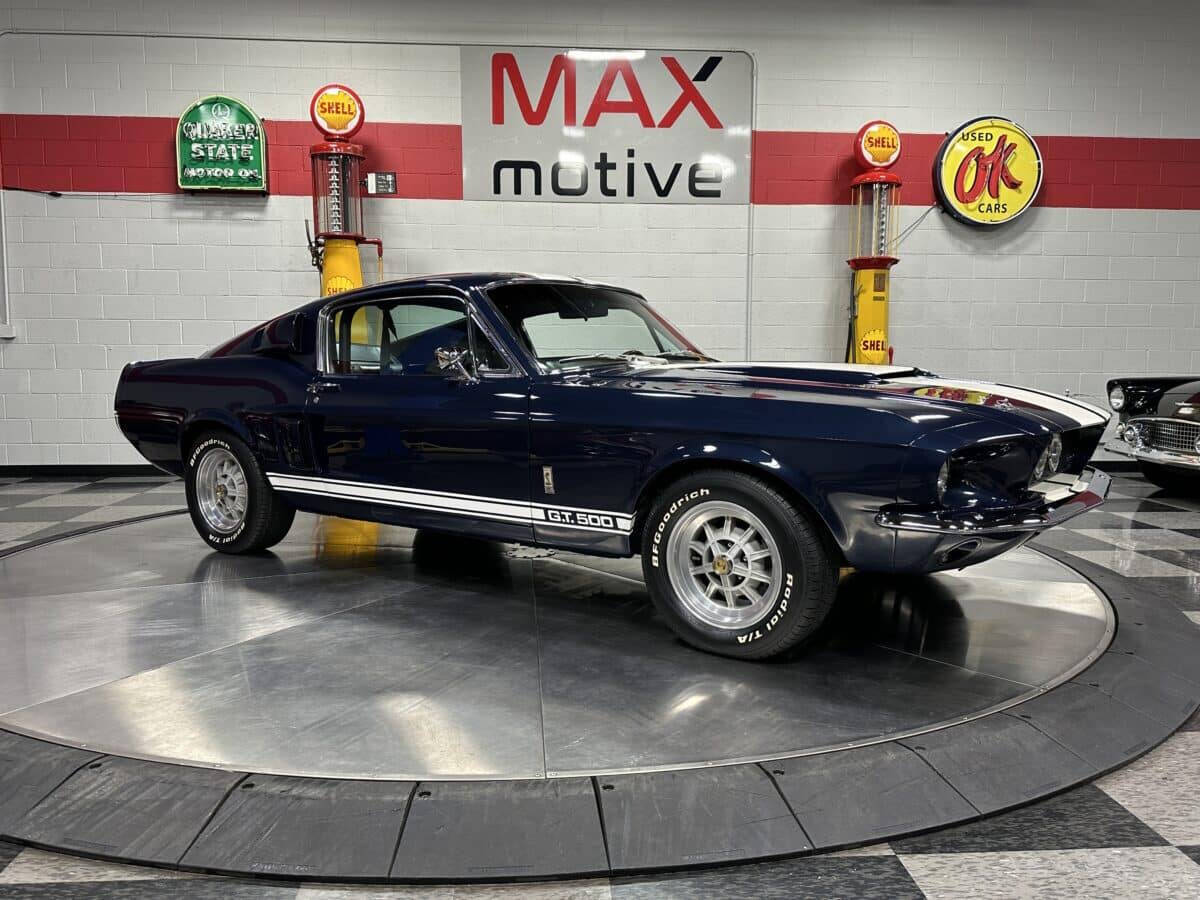
The 1967 GT500 was a dramatic departure from its predecessors, boasting a more aggressive and purposeful aesthetic. Key visual distinctions included:
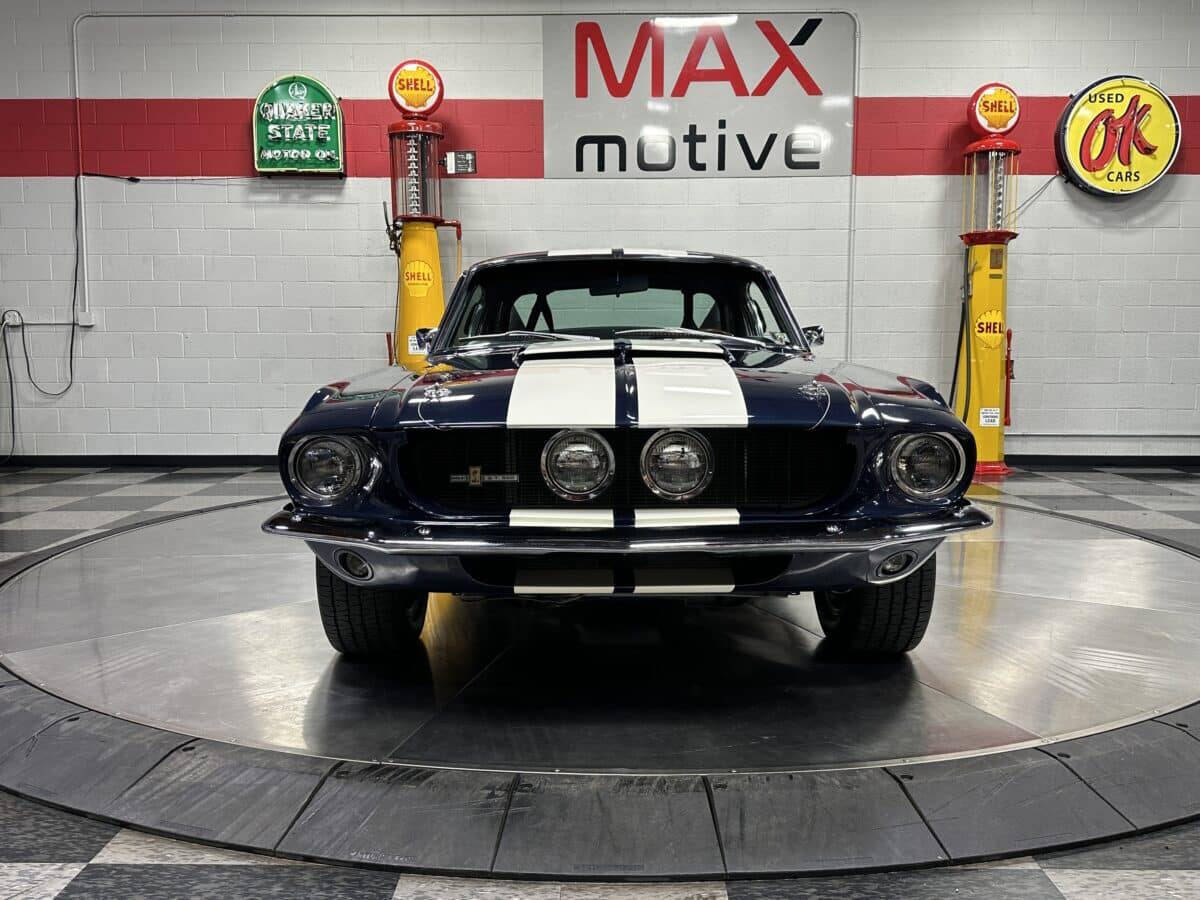
- Modified Fiberglass Components: Shelby American extensively utilized fiberglass to create unique styling cues. This included a longer, more aggressive nose cone with integrated high-beam headlights, a scooped hood with functional air vents, and aggressive side scoops that fed air to the rear brakes and engine bay.
- Rear Ducktail Spoiler: A prominent fiberglass ducktail spoiler was integrated into the trunk lid, enhancing aerodynamics and contributing to its menacing profile.
- Unique Grille: The grille featured a distinctive horizontal bar with the iconic Shelby Cobra emblem in the center.
- Side Scoops and Exhaust Outlets: Prominent side scoops were incorporated behind the doors, feeding air to the rear brakes. The dual exhaust pipes exited through stylish rear valence cutouts, adding to the aggressive stance.
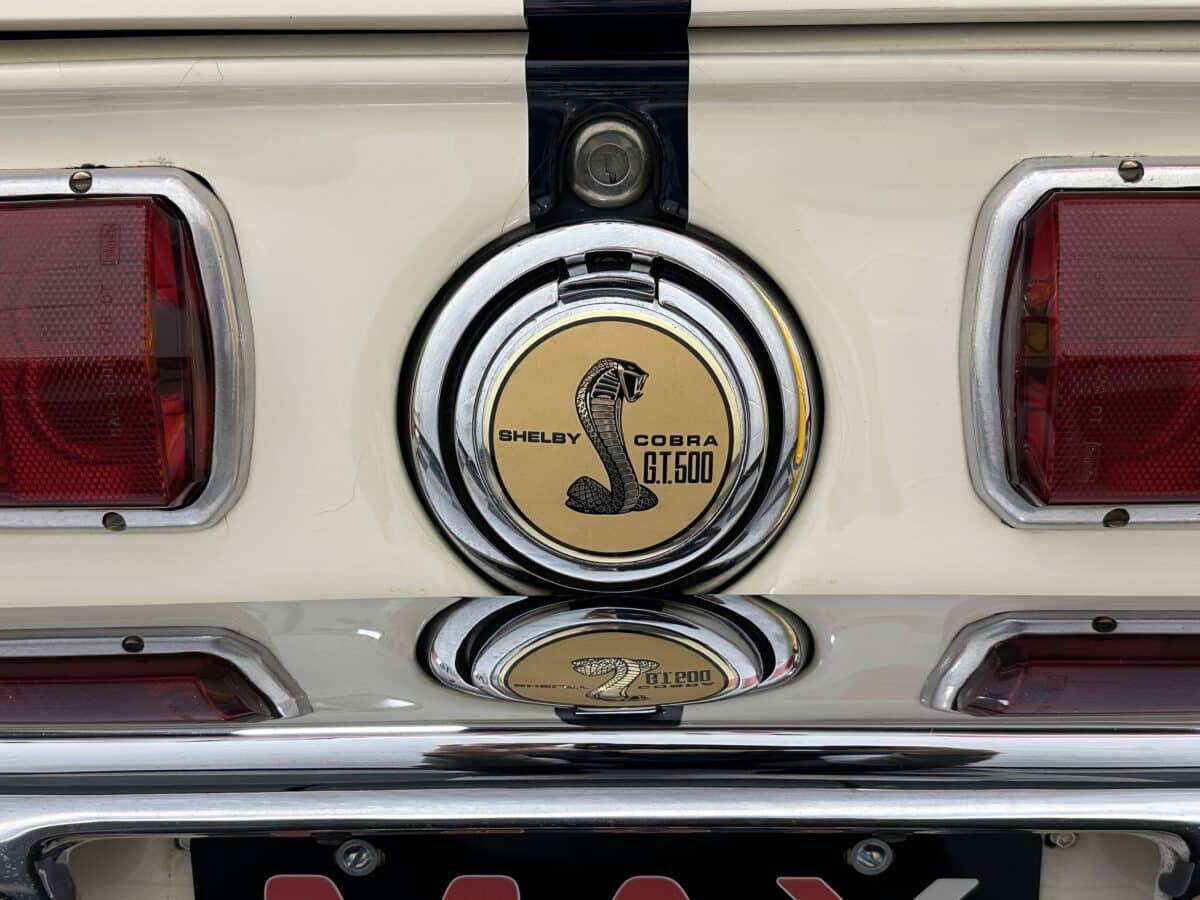
- Stripes and Badging: Classic Le Mans-style racing stripes ran the length of the car, often in contrasting colors. Shelby GT500 badging adorned the front fenders and rear panel, leaving no doubt about its pedigree.
Interior:
The interior of the GT500 reflected its performance-oriented nature while still offering a comfortable grand touring experience. Standard features included:
- Bucket Seats: Comfortable and supportive bucket seats were standard, often upholstered in vinyl or optional deluxe interior trim.
- Gauges: A custom dashboard featured additional Stewart-Warner gauges, including oil pressure, oil temperature, and amperage, providing the driver with vital performance information.
- Wood-Grained Trim: Wood-grained accents on the dashboard and steering wheel added a touch of class.
- Roll Bar: A distinctive roll bar with shoulder harnesses was a signature Shelby feature, emphasizing its racing heritage and safety.
- Shelby Steering Wheel: A classic Shelby steering wheel, often with a wood rim or the Cobra emblem, completed the sporty interior.
Racing Pedigree and Legacy:
The 1967 Shelby GT500 was built with racing in mind. It competed in various motorsport events, including the grueling 24 Hours of Daytona and the Baja 1000, showcasing its durability and performance. While not as successful as the lighter GT350 in SCCA racing, the GT500 proved itself as a formidable competitor.
The 1967 Shelby GT500 remains one of the most sought-after and valuable classic cars. Its potent combination of the powerful 428 V8, distinctive aggressive styling, and Shelby's racing heritage has cemented its status as a true American icon. Today, it is a highly desirable collector's item, representing a pivotal moment in the evolution of the muscle car era and a testament to Carroll Shelby's unwavering pursuit of automotive excellence.