


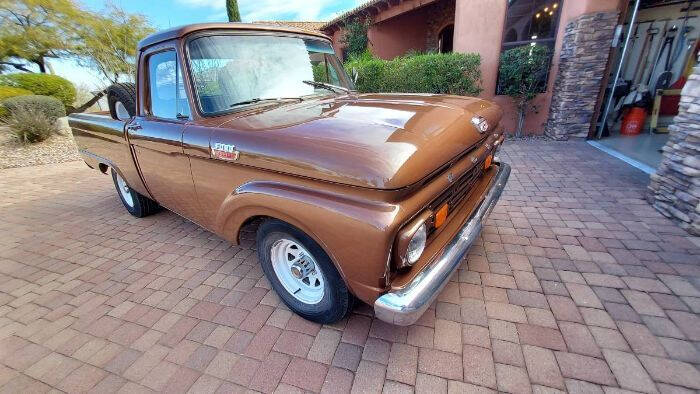

1964 Ford F-100: A Classic Workhorse Reimagined
The 1964 Ford F-100 represents a pivotal moment in the evolution of Ford's iconic pickup truck line. It stands as the second model year of the "New Generation" F-Series, a significant redesign that moved away from the utilitarian, truck-like aesthetics of its predecessors and embraced a more modern, car-like appearance. This shift marked a growing recognition of the pickup truck's potential beyond pure utility, signaling its increasing appeal to a broader range of buyers who valued comfort and style alongside capability.
Design and Styling:
The 1964 F-100 inherited the updated styling introduced with the 1961 model, but refined it for the year. The most striking feature was its "unibody" construction for Styleside pickup beds, a departure from the separate cab and bed of earlier generations. This integration offered a smoother, more cohesive look and improved structural rigidity.
- Front End: The distinctive single headlights flanking a prominent, horizontal grille were a hallmark of this generation. The grille itself was typically painted to match the body or featured a chrome accent. A prominent "FORD" script was usually mounted centrally on the hood. The front bumper was often a simple, sturdy chrome or painted unit.
- Side Profile: The cab featured clean lines and a more raked windshield than previous models, contributing to the car-like feel. Optional side trim, often a polished aluminum or stainless steel strip, enhanced the visual appeal. The F-100 was available in various wheelbases, accommodating different bed lengths.
- Rear End: The Styleside bed offered a smooth, continuous profile, while the traditional "Flareside" bed, with its prominent fender flares, remained an option for those who preferred the classic look. Taillights were typically simple, rectangular units mounted on the rear fenders.
Powertrain and Performance:
Ford offered a range of reliable and capable engines for the 1964 F-100, catering to different needs and preferences.
- Base Engine: The most common engine was the venerable 223 cubic inch "Mileage Maker" inline-six. This durable and fuel-efficient engine was a staple for Ford trucks and provided ample power for most everyday tasks.
- V8 Options: For those seeking more power and torque, Ford offered V8 engines. The most popular was likely the 292 cubic inch V8, known for its robust performance. A larger 352 cubic inch V8 was also available, offering even greater hauling and towing capabilities.
- Transmissions: Buyers could choose from a variety of transmissions, including a 3-speed manual, a 4-speed manual, and Ford's Cruise-O-Matic automatic transmission.
Interior and Features:
The interior of the 1964 F-100 reflected the move towards greater comfort and refinement.
- Cabin: The cab was designed to be more spacious and car-like, with improved seating and visibility.
- Dashboard: The dashboard featured a clean layout with essential gauges for speed, fuel, and temperature. Optional accessories like a radio, heater, and defroster were available to enhance comfort.
- Seating: The standard bench seat was comfortable, and optional bucket seats were available on some models or through aftermarket modifications, further enhancing the truck's dual-purpose appeal.
Legacy and Significance:
The 1964 Ford F-100 is a highly sought-after classic truck today. It represents a crucial evolutionary step for the F-Series, successfully blending robust utility with increasingly car-like comfort and styling. Its clean lines, reliable powertrains, and the availability of desirable V8 engines have cemented its place as a beloved icon of American automotive history. Many examples have been preserved or restored, showcasing the enduring appeal of this capable and stylish workhorse. It laid the groundwork for the continued success and evolution of the Ford F-Series, which remains a dominant force in the pickup truck market.