


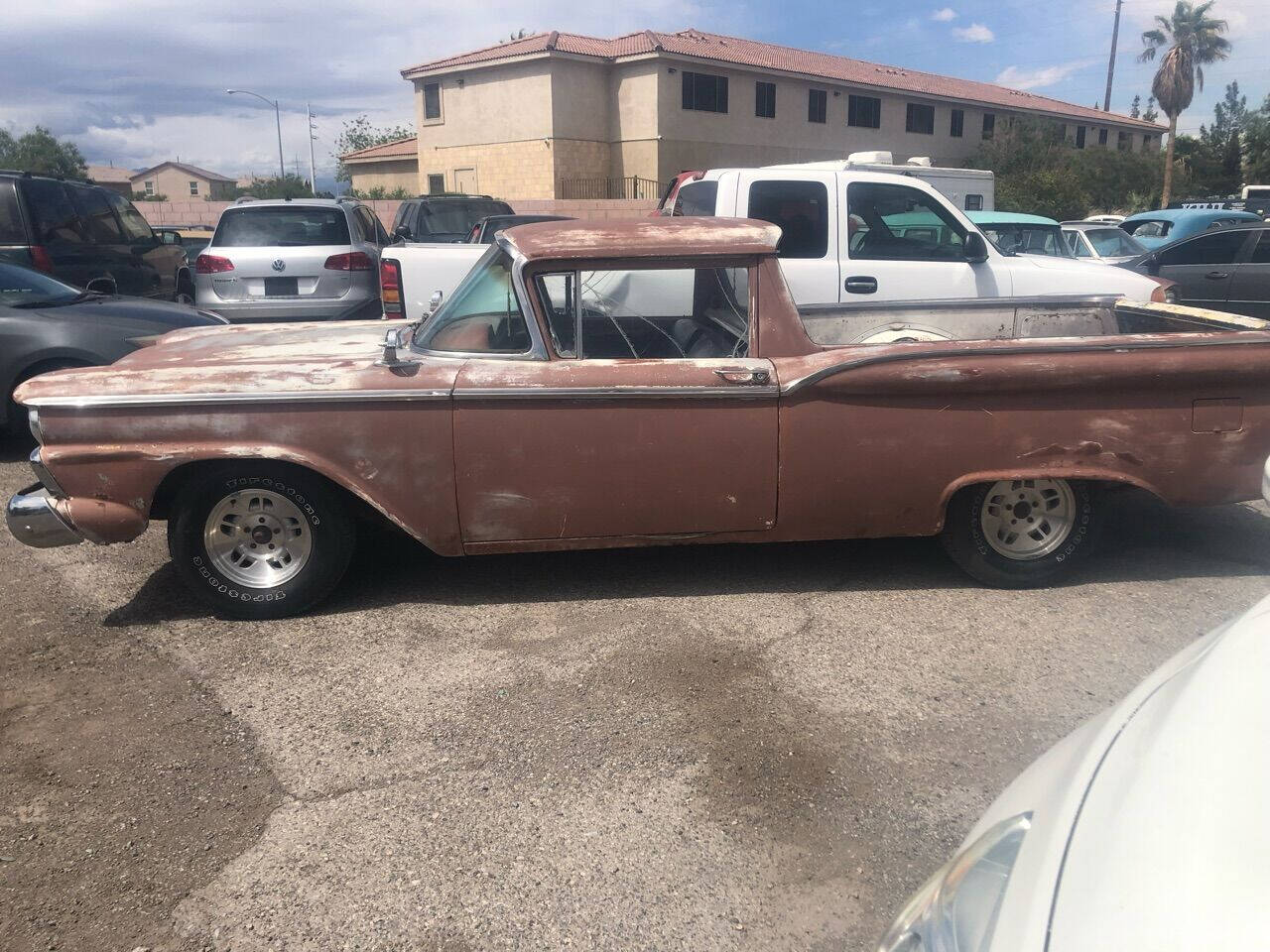

The 1959 Ford Ranchero: A Truck-Car Hybrid Pioneer
The 1959 Ford Ranchero holds a significant place in automotive history as one of the earliest and most successful attempts to blend the practicality of a pickup truck with the comfort and style of a passenger car. Introduced in 1957, the Ranchero entered its third year of production in 1959, solidifying its unique position in the market and continuing to appeal to a wide range of buyers seeking versatility without sacrificing car-like amenities.
Concept and Design:
The core concept behind the Ranchero was simple yet revolutionary: take the chassis and body of a Ford Fairlane sedan and integrate an open-bed pickup truck cargo area. This resulted in a vehicle that looked remarkably like a car from the front, complete with the familiar styling cues of Ford's passenger car lineup, but transitioned into a distinct truck bed towards the rear.
For 1959, the Ranchero mirrored the styling updates of the mainstream Ford lineup, which saw a more pronounced "dogleg" curve to the rear side windows and a cleaner, more integrated grille design. The front end featured a wide, horizontal grille with dual headlights flanking it. The side profile was characterized by a smooth, flowing line from the A-pillar back to the tailgate, with chrome trim accentuating the passenger cabin and the transition to the bed. The bed itself was a well-proportioned, functional unit, capable of carrying a decent payload, making it ideal for light hauling, delivery, or recreational use.
Powertrain Options:
The 1959 Ford Ranchero offered a range of powertrain options, reflecting Ford's commitment to providing choices for different driving needs and preferences. Buyers could opt for:
- "Mileage Maker" 223 cu in (3.7 L) Inline-6: This engine was the standard offering, providing adequate power for everyday driving and emphasizing fuel economy.
- "Thunderbird 292" 292 cu in (4.8 L) V8: A popular upgrade, this V8 offered a noticeable increase in power and torque, making for more spirited performance.
- "Thunderbird 352" 352 cu in (5.8 L) V8: For those seeking the ultimate in performance, the larger 352 V8 provided robust acceleration and towing capability, often associated with Ford's premium offerings.
Transmission choices typically included a 3-speed manual (column or floor-mounted) and Ford's "Cruise-O-Matic" 2-speed automatic transmission, further enhancing the car-like driving experience.
Trim Levels and Features:
The 1959 Ranchero was primarily offered in a single, well-equipped trim level, designed to appeal to the passenger car buyer. Standard features often included:
- Bench seating
- Full instrumentation
- Interior door panels and trim
- Wrap-around windshield (a signature Ford styling cue of the era)
- Chrome exterior accents (bumpers, grille, window surrounds, side trim)
Optional features allowed buyers to further customize their Rancheros and enhance their comfort and convenience, such as:
- Upgraded upholstery
- Power steering
- Power brakes
- Radio
- Heater
- Deluxe wheel covers
- Two-tone paint schemes
Market Impact and Legacy:
The 1959 Ford Ranchero, along with its precursor, was a trailblazer in the "coupe utility" segment. It successfully catered to individuals and families who needed the utility of a pickup for occasional hauling or work but desired the comfort, style, and handling characteristics of a passenger car for daily use. This duality made it a compelling option for farmers, small business owners, and even those with active lifestyles who could use the bed for sporting equipment or camping gear.
While not a direct competitor to traditional, body-on-frame pickup trucks, the Ranchero carved out its own niche. Its sales figures were respectable, demonstrating the viability of the car-truck hybrid concept. The Ranchero's success paved the way for subsequent generations of similar vehicles, including Chevrolet's El Camino, which would become a long-standing icon in its own right.
In summary, the 1959 Ford Ranchero was a forward-thinking vehicle that bridged the gap between passenger cars and trucks. Its stylish design, comfortable interior, and practical cargo bed offered a unique blend of attributes that resonated with buyers looking for versatility and a touch of automotive innovation. Today, the 1959 Ranchero is recognized as a classic example of automotive design experimentation and a testament to Ford's willingness to explore new market segments.