


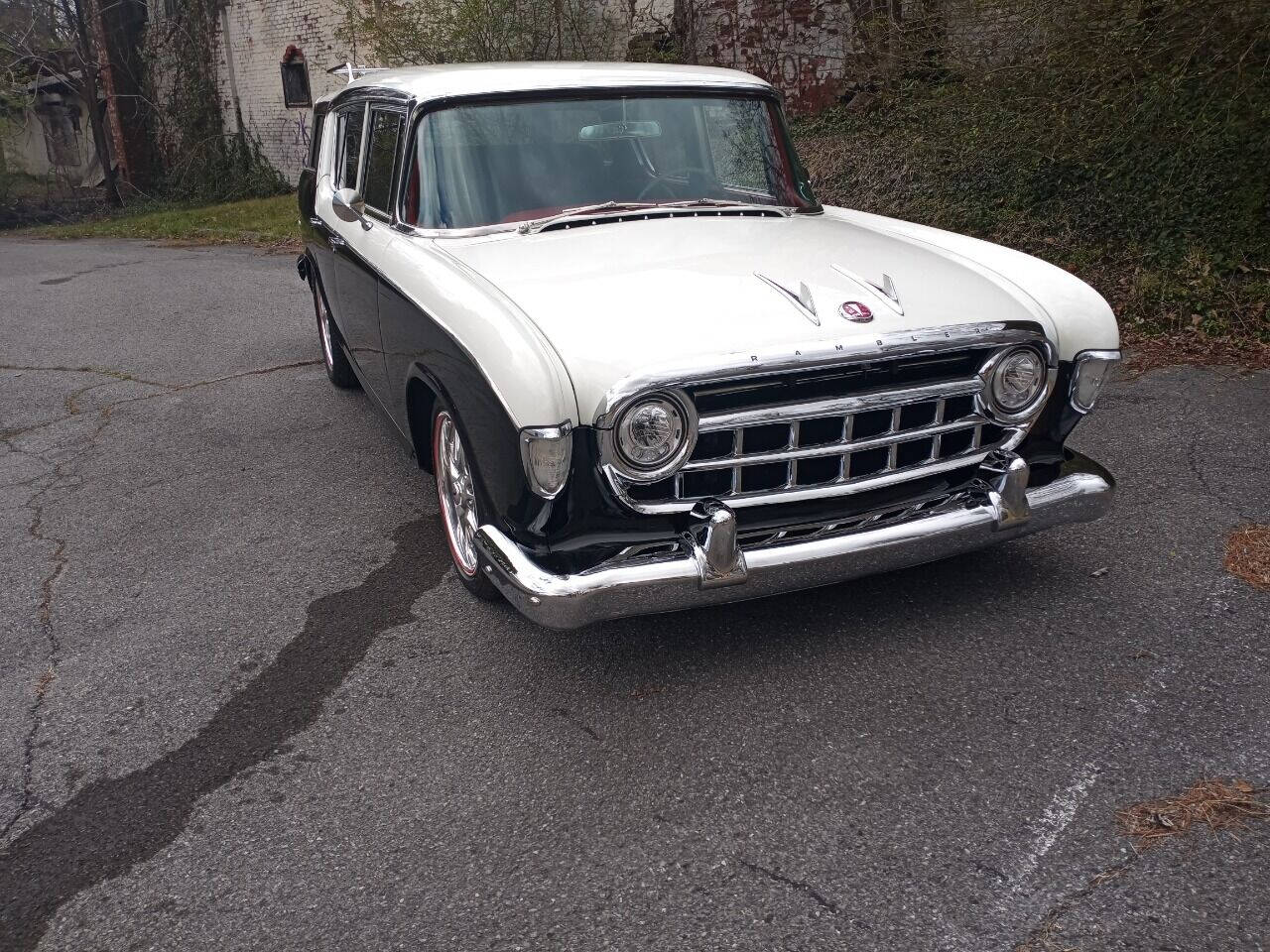
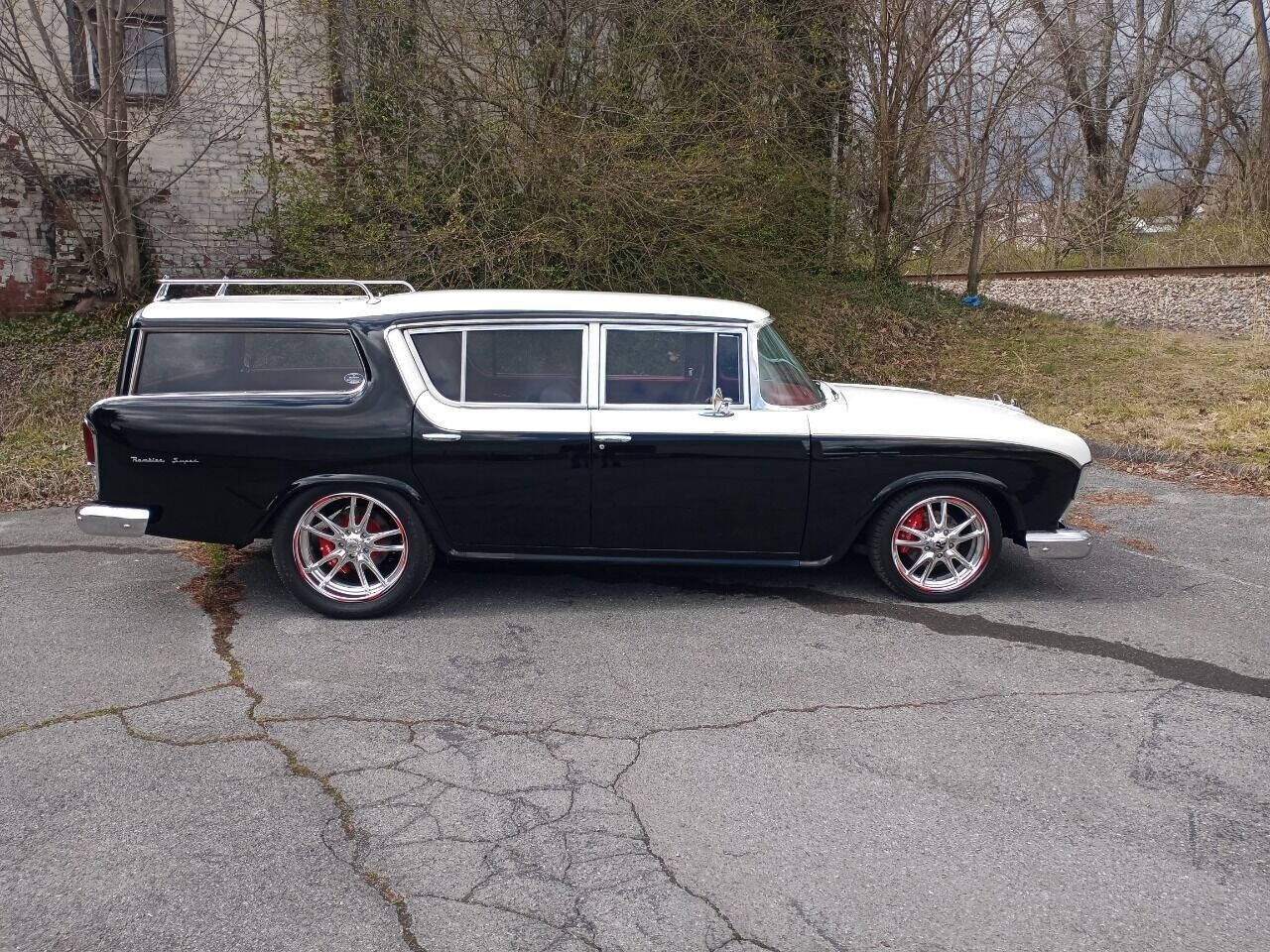
1956 Hudson Super Cross Country Wagon
The 1956 Hudson Super Cross Country Wagon represented the zenith of Hudson's foray into the increasingly popular station wagon market, blending American automotive flair with robust utility and a touch of upscale refinement. As part of the updated "Baja" line for 1956, the Super Cross Country was designed to appeal to families and those seeking a vehicle capable of both comfortable daily transport and the demands of weekend adventures.
Design and Styling:
The 1956 Hudson wagons, including the Super Cross Country, underwent a significant styling refresh compared to their predecessors. They adopted a more modern and integrated appearance, moving away from the somewhat separate fender designs of earlier years. Key stylistic elements included:
- Forward-Look Design: While the dramatic "Forward-Look" styling of the early 1950s was toning down, Hudson wagons still exhibited a distinctively forward-leaning profile. This was achieved through the use of a relatively prominent grille, slanted headlights, and a general sense of motion conveyed by the body lines.
- Two-Tone Paint Schemes: Dual-tone paint was a hallmark of American automobiles in the mid-1950s, and the Hudson Super Cross Country embraced this trend. Popular combinations often featured a contrast color on the roof, pillars, and often a sweeping accent stripe along the sides, accentuating the wagon's length and creating a sophisticated look.
- Tailfins: While not as ostentatious as some competitors, the 1956 Hudson wagons featured subtle but stylish tailfins that added to the car's dynamic appearance and were a nod to the burgeoning jet-age aesthetic.
- Station Wagon Practicality: The core of the Cross Country's appeal lay in its practical wagon body. It featured a robust roof rack for additional cargo, a substantial rear tailgate (often with a split tailgate design or a single, large liftgate), and ample interior space designed for passengers and freight.
- Chrome Accents: Generous amounts of chrome trim adorned the grille, bumpers, window surrounds, door handles, and side moldings, contributing to the car's premium feel and highlighting its design features.
Powertrain and Performance:
The 1956 Hudson Super Cross Country was equipped with Hudson's robust and well-regarded powertrain options:
- Engines: The Super Cross Country typically featured Hudson's larger V8 engine, known for its strong performance. This was often the "Twin-Grip" 320 cubic inch V8, offering good torque for hauling and a responsive driving experience. Power output was competitive for the era, providing confident acceleration.
- Transmissions: Buyers had a choice of transmissions, most commonly a smooth-shifting automatic transmission (often a General Motors Hydramatic unit, as Hudson had partnered with GM for transmissions in this period) or a manual transmission. The automatic was particularly popular for its ease of use in family vehicles.
- Suspension and Handling: Hudson wagons were known for their comfortable ride, owing to their well-engineered suspension systems. While not a sports car, the Cross Country offered competent handling for its size and class, making it suitable for long-distance touring.
Interior and Features:
Inside, the Super Cross Country aimed to provide a comfortable and practical environment for families:
- Spacious Seating: The wagon offered comfortable seating for up to six passengers, with a split bench seat in the front and a full bench in the rear. The rear bench often folded down to create a flat, expansive cargo area.
- Durable Upholstery: Interior trim and upholstery were typically made from durable fabrics and vinyl, designed to withstand the rigors of family use and cargo transport.
- Dashboard and Controls: The dashboard featured a classic 1950s layout with a comprehensive instrument cluster, including speedometer, fuel gauge, oil pressure, and temperature gauges. Controls were logically placed for ease of use.
- Optional Amenities: While the Super designation implied a higher trim level, optional features like power steering, power brakes, a heater, and a radio were available to further enhance comfort and convenience.
Market Position and Legacy:
The 1956 Hudson Super Cross Country Wagon competed in a crowded market of American station wagons from manufacturers like Ford, Chevrolet, Plymouth, and Chrysler. While Hudson was a respected name in automotive history, the company was facing increasing consolidation and competition during this period. Despite its quality and attractive styling, the Super Cross Country, like other Hudson models, ultimately struggled to capture significant market share.
However, the 1956 Hudson Super Cross Country Wagon remains a desirable classic for enthusiasts who appreciate its unique styling, robust build, and the distinctive heritage of the Hudson marque. It represents a period when American automakers were pushing the boundaries of design and functionality in family vehicles, offering a compelling blend of utility and style.