


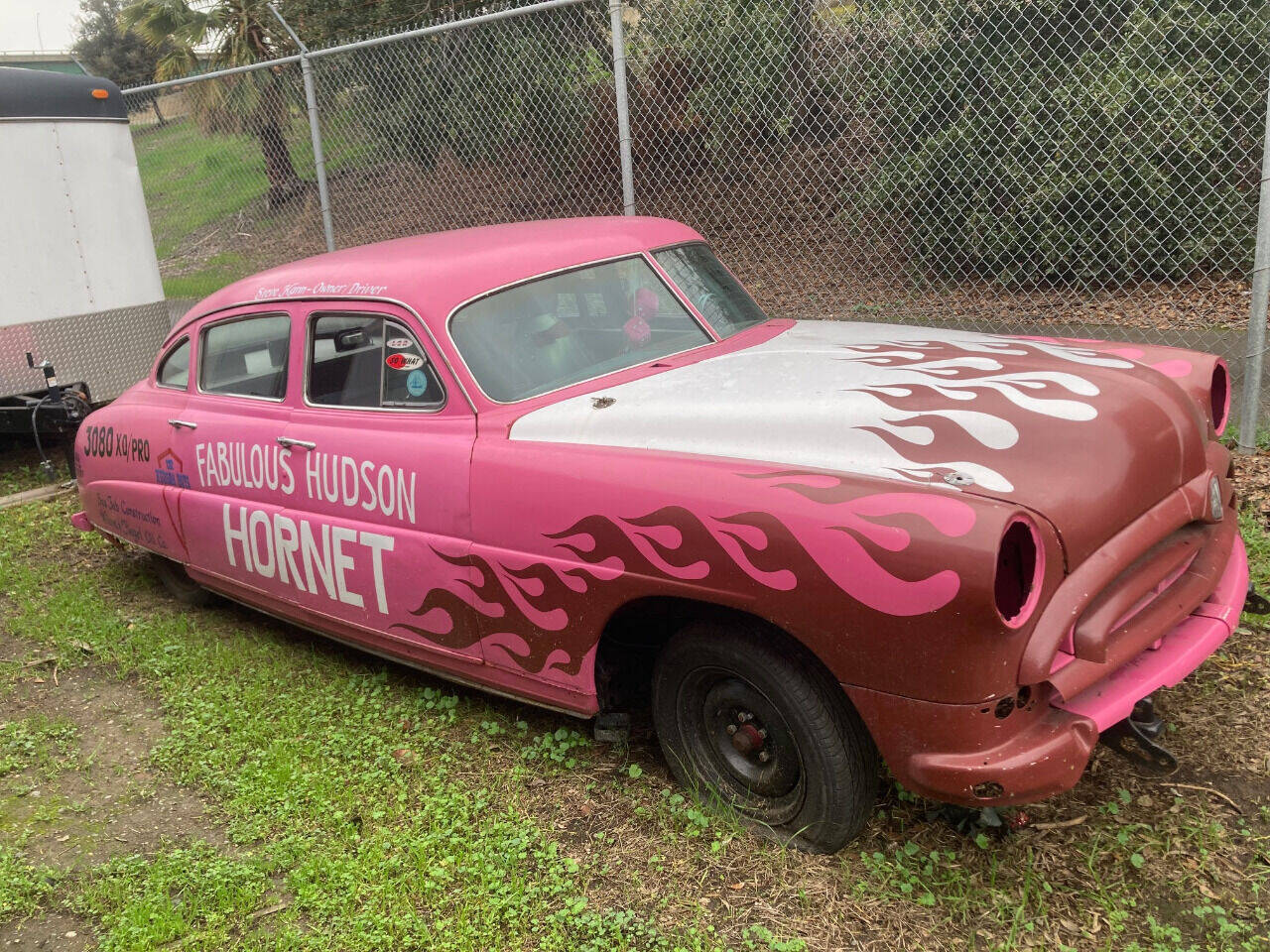

1953 Hudson Hornet: The Pinnacle of "Step-Down" Design and Racing Dominance
The 1953 Hudson Hornet marked a significant year for the iconic American automobile, representing the maturation of its revolutionary "Step-Down" design and solidifying its reputation as a dominant force in stock car racing. Building upon the success of its predecessors, the '53 Hornet offered a compelling blend of distinctive styling, a spacious and comfortable interior, and a powerful engine that made it a true performance contender.
Design and Engineering: The Enduring "Step-Down" Advantage
Hudson's signature "Step-Down" unibody construction, introduced in 1948, was at its zenith in 1953. This innovative engineering approach lowered the passenger compartment by several inches between the frame rails, creating a remarkably flat floor. The benefits were manifold:
- Lower Center of Gravity: This provided superior handling and road-holding capabilities, especially noticeable in corners. It gave the Hornet a planted, almost "glued-to-the-road" feel that was revolutionary for its time.
- Spacious and Airy Interior: The absence of a high transmission tunnel and the lower floor allowed for an incredibly open and inviting cabin. Passengers enjoyed ample headroom and legroom, contributing to the Hornet's reputation for comfort.
- Distinctive Styling: The low-slung silhouette, achieved through the Step-Down design, gave the Hornet an instantly recognizable and sophisticated appearance. The distinctive wraparound windshield, integrated fenders, and flowing body lines exuded an air of elegance and modernity.
For 1953, the Hornet received a refresh that further refined its already striking looks. Key visual updates included:
- New Grille: A more substantial and visually dominant grille replaced the previous design, giving the front end a more imposing presence.
- Revised Headlight Bezels and Parking Lights: These elements were subtly restyled for a cleaner and more contemporary look.
- Increased Chrome Accentuation: More chrome trim was added to the exterior, particularly around the windows and along the body, enhancing its premium appeal.
- Improved Interior Appointments: The interior received upgrades in materials and finishes, further contributing to the car's comfortable and luxurious feel.
Powertrain: The Mighty "Twin-H Power" Engine
The heart of the 1953 Hudson Hornet was its potent 282 cubic inch "Twin-H Power" inline-six engine. This robust powerplant was a marvel of engineering for its era, featuring:
- High Compression Ratio: For its time, the Hornet's engine boasted a high compression ratio, leading to better efficiency and more power.
- Dual Carburetion: The "Twin-H" designation referred to the dual downdraft carburetors, which significantly boosted horsepower and torque, giving the Hornet impressive acceleration and cruising ability.
- Overhead Valve Design: This modern (for the time) valve arrangement contributed to the engine's smooth operation and breathing.
The 282ci engine produced a healthy 145 horsepower, a figure that, combined with the Hornet's excellent weight distribution and low center of gravity, made it a formidable performer. This engine was mated to either a standard 3-speed manual transmission or an optional "Drive-Master" automatic transmission (a GM Hydra-Matic unit in Hudson's first year of using it).
Racing Dominance: The "Fabulous Hudson Hornets" on the Track
The 1953 model year cemented the Hudson Hornet's legendary status in the burgeoning world of stock car racing. Driven by legendary figures like Marshall Teague and Herb Thomas, the Hornets dominated the NASCAR Grand National circuit. Their "Step-Down" chassis proved to be a significant advantage on oval tracks, allowing them to corner with superior speed and stability.
The Hornets' racing prowess wasn't just about raw power; it was about the synergy of their design, engine, and the skill of their drivers. They were the undisputed kings of the track, earning them the moniker "Fabulous Hudson Hornets." This racing success translated directly into showroom appeal, as buyers wanted a piece of that winning heritage.
Body Styles and Trims:
The 1953 Hudson Hornet was offered in a variety of popular body styles, catering to different needs and preferences:
- 2-Door Coupe: The most iconic and sporty representation of the Hornet.
- 4-Door Sedan: Offering more practicality and passenger space.
- 2-Door Hardtop (Brougham): A more stylish and luxurious option with a pillarless design.
- Convertible: A rare and highly sought-after model for open-air motoring.
Each body style benefited from the same underlying engineering and the signature "Step-Down" construction.
Legacy and Significance:
The 1953 Hudson Hornet stands as a testament to innovative American automotive engineering and design. It was a car that dared to be different, prioritizing handling and comfort through its unique "Step-Down" unibody. Its success on the racetrack further amplified its appeal, making it a beloved classic that continues to be admired for its style, performance, and racing pedigree. The 1953 model year represents a peak in the Hornet's storied history, a car that truly lived up to its "fabulous" reputation.