


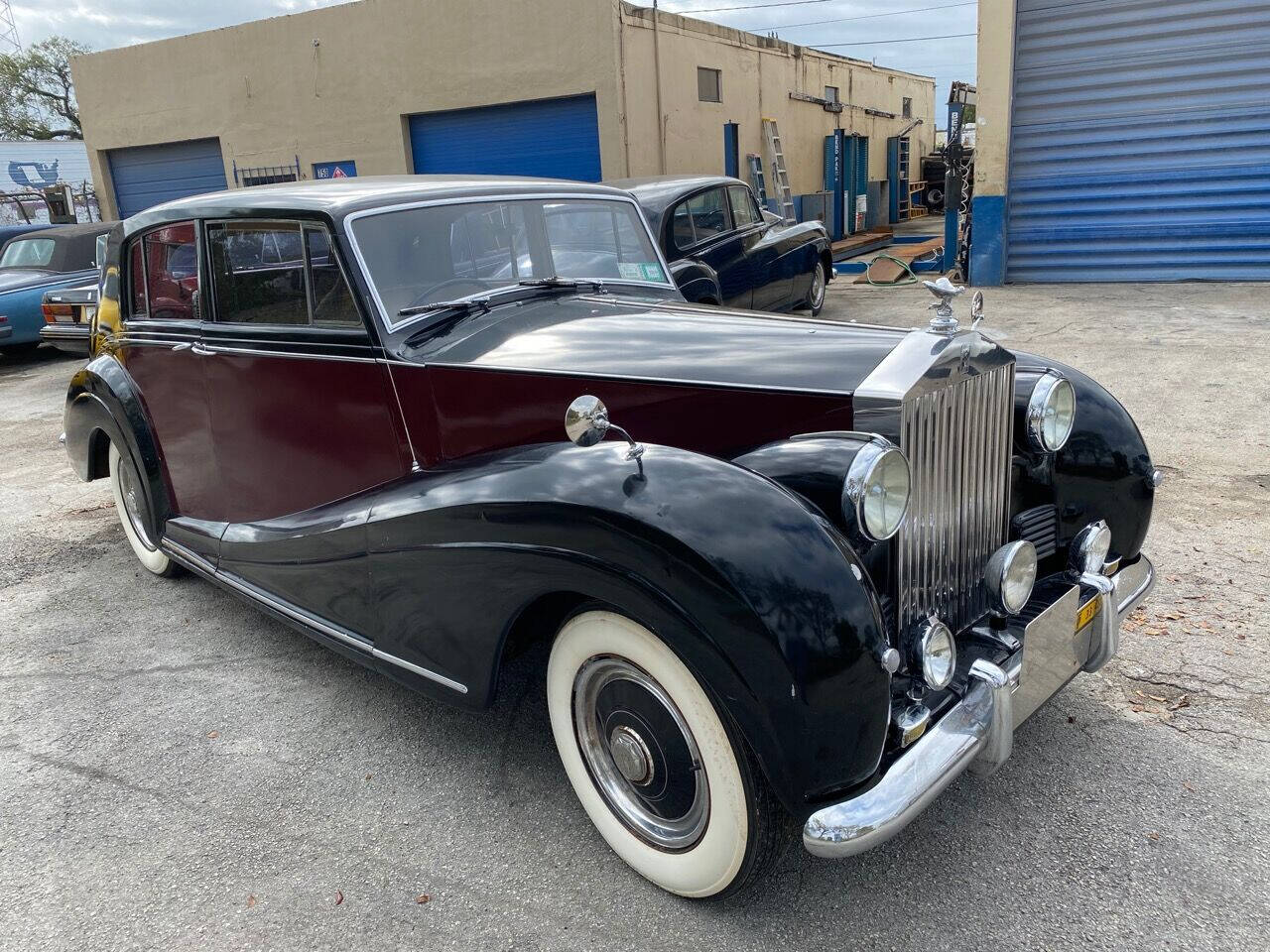

1952 Rolls-Royce Wraith
The 1952 Rolls-Royce Wraith stands as a significant model in the history of this prestigious marque, representing a transition in design and engineering while retaining the hallmarks of unparalleled luxury, craftsmanship, and performance that define Rolls-Royce. Introduced in 1946 as a successor to the pre-war Phantom III, the Wraith was produced until 1959, with the 1952 model year falling within the core of its production run. It was the last Rolls-Royce to feature a separate, rigid chassis and body construction, a defining characteristic of its era.
Design and Styling:
The Wraith's design, penned by Rolls-Royce's own design department, eschewed flamboyant styling for a more restrained and elegant, yet imposing, presence. It embodied the post-war British automotive aesthetic, characterized by flowing lines and a substantial, dignified silhouette. Key design elements include:
- Distinctive Grille: The iconic, tall, rectangular radiator grille, topped with the iconic "Spirit of Ecstasy" mascot, remained a central visual cue. The grille was typically finished in chrome, a signature of Rolls-Royce.
- Streamlined Bodywork: Compared to its pre-war predecessors, the Wraith featured a more streamlined and aerodynamic profile. This was achieved through gently curved fenders, a sloping rear roofline, and integrated headlamps.
- Generous Proportions: The Wraith was a large car, designed to offer ample interior space and a commanding road presence. Its wheelbase and overall length contributed to its stately appearance.
- Coachwork Options: While Rolls-Royce built the chassis and powertrain, the distinctive bodywork was typically supplied by external coachbuilders, with Park Ward, H.J. Mulliner, and James Young being prominent names. This allowed for a degree of personalization and catered to individual client preferences. Common body styles included the four-door saloon (sedan) and, less commonly, the two-door coupé.
Mechanicals and Engineering:
Beneath its elegant exterior, the 1952 Wraith was a marvel of engineering for its time, prioritizing refinement, durability, and smooth operation.
- Engine: The heart of the Wraith was its powerful and smooth 4.3-litre (265 cubic inch) F-head straight-eight engine. This engine was renowned for its torque and effortless power delivery, designed to propel the large vehicle with quiet confidence rather than aggressive acceleration. It featured overhead inlet valves and side exhaust valves.
- Transmission: The standard transmission was a four-speed manual gearbox. Notably, later models, and potentially some 1952 examples depending on specific build dates and options, could be equipped with an automatic transmission.
- Suspension: The Wraith utilized a traditional independent front suspension and a live rear axle with leaf springs. While not as sophisticated as later independent suspension systems, it was meticulously tuned to provide a remarkably comfortable and compliant ride, soaking up road imperfections with ease.
- Brakes: The braking system comprised hydraulic drum brakes on all four wheels, providing adequate stopping power for the vehicle's weight and performance capabilities.
- Chassis: The robust, separate steel chassis provided a strong foundation for the body and allowed for the extensive use of coachbuilt bodies, offering flexibility for designers and coachbuilders.
Luxury and Interior:
The interior of a 1952 Rolls-Royce Wraith was a sanctuary of opulence and bespoke craftsmanship. Every detail was considered to ensure the utmost comfort and exclusivity for its occupants.
- Materials: Finely selected timbers, typically burled walnut or rich mahogany, were used extensively for dashboard inlays, door cappings, and other interior trim. High-quality leather, often in rich hues, upholstered the seats and door panels.
- Comfort and Amenities: The cabin was designed for passenger comfort, with spacious seating, ample legroom, and excellent ventilation. Features could include fold-out picnic tables, cigar lighters, vanity mirrors, and robust heating systems.
- Instrumentation: The dashboard featured a classic array of analogue instruments, elegantly presented and easy to read, providing essential information about the car's operation.
Significance and Legacy:
The 1952 Rolls-Royce Wraith represented the pinnacle of British automotive luxury in the post-war era. It bridged the gap between the pre-war era of opulent, coachbuilt automobiles and the more integrated, monocoque designs that would become prevalent later. It was a testament to Rolls-Royce's unwavering commitment to excellence, providing a discreet yet undeniable statement of status and discerning taste. Owning a Wraith was not just about transportation; it was about experiencing a mobile piece of art, meticulously engineered and crafted to endure. Today, these cars are highly sought after by collectors for their timeless elegance, engineering prowess, and enduring connection to a golden age of automotive craftsmanship.