

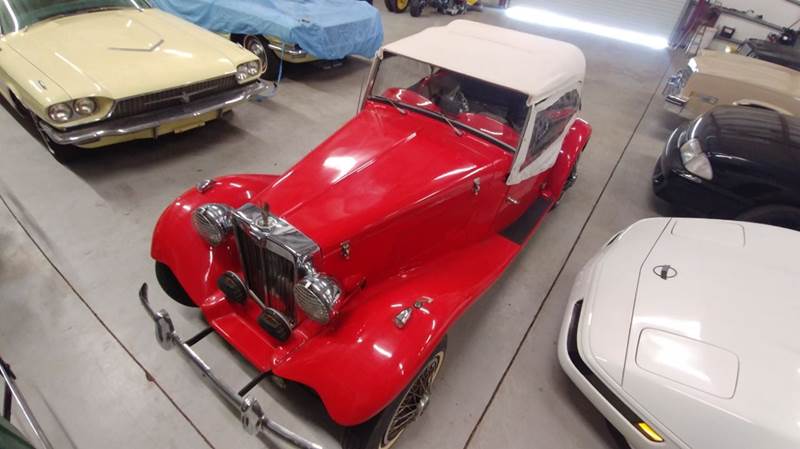
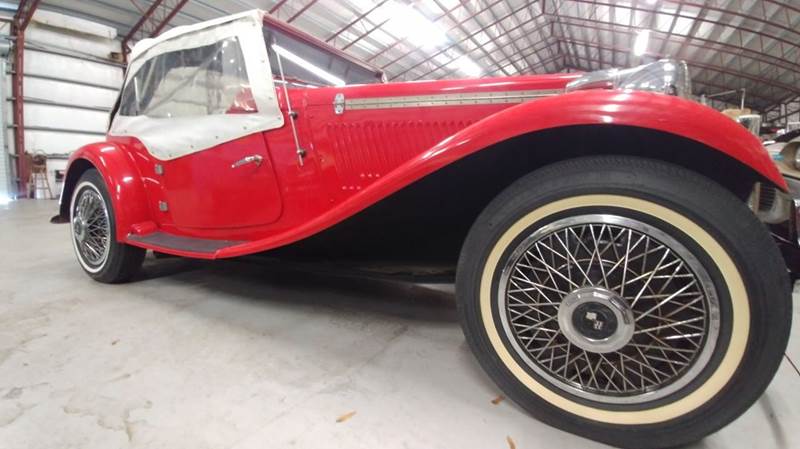
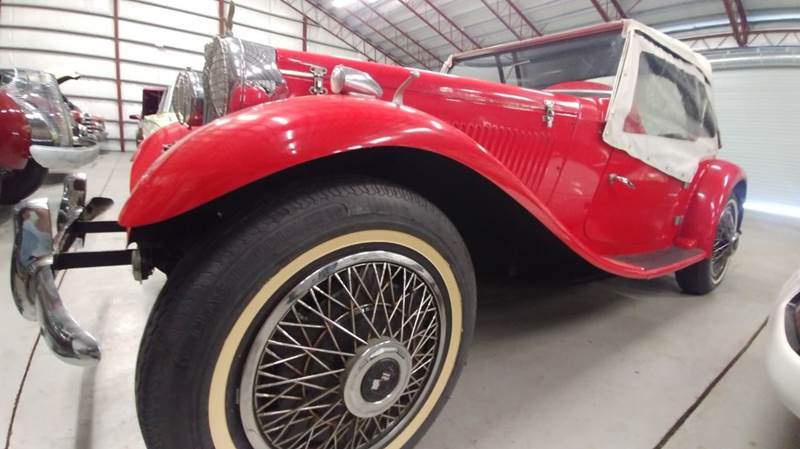
1951 MG TC Midget
The MG TC Midget, produced from 1945 to 1949, holds a special place in automotive history as a quintessential post-war British sports car. While production officially ended in 1949, many examples found their way into the early 1950s, particularly in export markets, and it's common to see them registered and discussed as 1951 models, especially those that might have been held in inventory or re-registered later. For the purpose of this overview, we will focus on the characteristics of the TC as it was known during its production run and into the early 1950s.
The TC represented a significant evolution from its pre-war Midget predecessors, the TA and TB, offering a more powerful engine and a slightly larger cockpit, making it more accommodating for taller drivers. It was a car designed to evoke the spirit of open-top motoring, freedom, and sporting performance, a much-needed sentiment after the austerity of World War II.
Key Features and Design:
- Body Style: The TC was exclusively offered as a two-seater open-top roadster. Its iconic design featured flowing fenders, a steeply raked windscreen, a prominent grille, and flowing lines that epitomized the classic British sports car aesthetic. The bodywork was typically painted in vibrant colors, a stark contrast to the more subdued palettes of many contemporary vehicles.
- Chassis and Suspension: It was built on a ladder-type chassis, a common construction method for the era. The suspension system consisted of semi-elliptic leaf springs all around, with the front featuring rigid beam axles and the rear a live axle. While robust, this setup contributed to the TC's characteristic handling, which, while sporting, could be lively and demanding for the uninitiated.
- Engine: The heart of the TC was its 1250cc (1.25L) inline-four pushrod engine. This engine, derived from the Wolseley Ten, was equipped with two SU carburetors, delivering a respectable 54.5 horsepower at 4,500 rpm. This power output, while modest by modern standards, was more than adequate for the lightweight TC and provided spirited performance for its time. The engine note was a distinctive, throaty bark that became synonymous with MG.
- Transmission: The TC featured a four-speed manual gearbox, known for its "crash" synchromesh on the top three gears. The gear change was a direct, mechanical affair, requiring a firm hand and precise movement.
- Brakes: Hydraulic drum brakes were fitted on all four wheels. While an improvement over earlier cable-operated systems, they required a firm pedal application and could be prone to fading under hard use, a common characteristic of braking systems of that period.
- Interior: The cockpit was spartan yet functional, designed for the driver. It featured simple bucket seats, a wooden dashboard with a comprehensive array of Jaeger instruments, and a three-spoke steering wheel. The lack of creature comforts, such as a heater or radio as standard, underscored its sporting intent. Access to the rear was via the iconic "suicide doors" (hinged at the rear), which added to its vintage charm.
Significance and Legacy:
The MG TC was particularly influential in the United States. Its arrival in 1945, even before the end of the war in some respects, captured the imagination of returning GIs who had encountered MGs during their service in Britain. The TC's relatively affordable price point and its image as an authentic, no-nonsense sports car made it a highly desirable machine for those seeking an exhilarating driving experience.
It was this export success that laid the groundwork for MG's burgeoning reputation in America, paving the way for its successor, the TD. The TC's simple, robust engineering, combined with its timeless styling and engaging driving dynamics, cemented its status as a beloved classic. Owning and driving a TC was, and still is, an experience that connects the driver to a bygone era of motoring, demanding a certain skill and rewarding with a visceral sense of connection to the road and the machine. Despite its age and relative lack of refinement by today's standards, the 1951 MG TC remains a cherished icon of British sports car heritage.